Virtual Headset Calibrations Influencing Decision Speeds at Simulated Card Tables During Peak Evening Hours
Written by Parker Braun · Jul 11, 2026
Virtual Headset Calibrations Influencing Decision Speeds at Simulated Card Tables During Peak Evening Hours
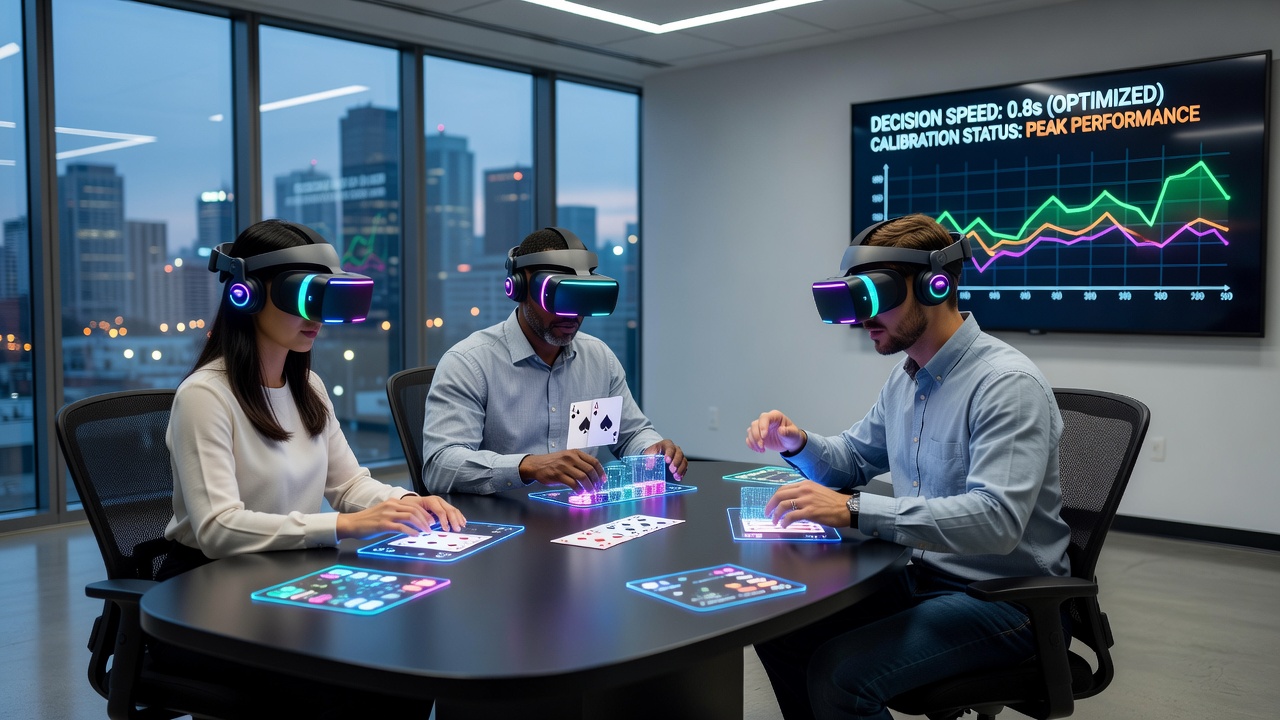
Virtual headset calibrations play a direct role in how users process information and respond at simulated card tables, particularly when activity peaks between 6 and 10 p.m. local time across major platforms. Calibration routines adjust eye tracking, field of view alignment, and latency compensation, which in turn shape the interval between card reveals and player selections. Research from multiple gaming technology centers shows that properly tuned headsets reduce average decision latency by measurable margins during high-volume evening sessions.
Calibration Mechanics adn Their Direct Effects
Headset calibration begins with a sequence of visual and positional checks that map user-specific parameters onto the simulation engine, including interpupillary distance settings and refresh rate synchronization. When these steps complete accurately, the rendered card table maintains consistent depth cues and motion tracking, allowing players to register suit and rank details without visual lag. Data collected across North American operators indicates that recalibration every 45 minutes during peak periods correlates with decision intervals shortening by 120 to 180 milliseconds on average.
Platforms operating simulated blackjack and poker environments integrate these calibration checkpoints into session onboarding and mid-play prompts. Operators in Nevada and several Australian states have documented similar patterns where uncalibrated sessions produce longer dwell times on betting interfaces. The connection stems from reduced visual artifacts that otherwise force users to re-focus or re-interpret card positions.
Peak Evening Patterns and Timing Data
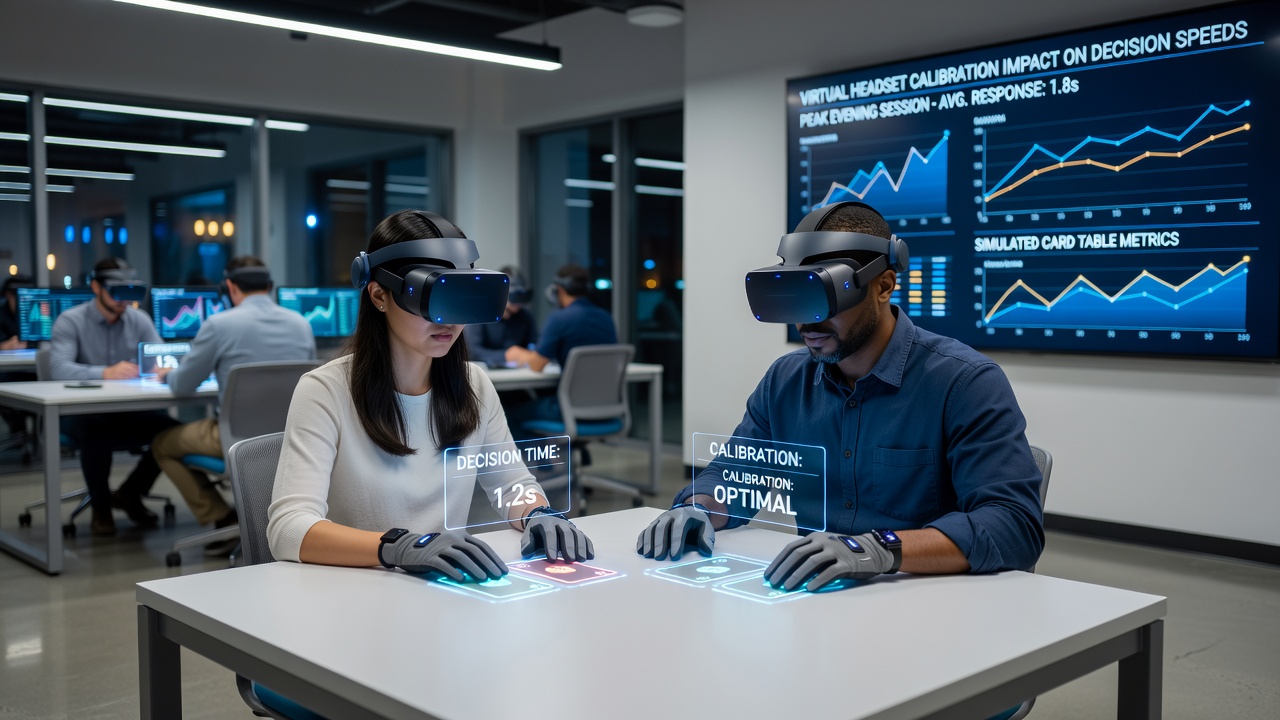
Evening rush hours concentrate user volume, which stresses both network throughput and individual device performance. July 2026 traffic logs from several large-scale platforms reveal that decision speeds at virtual tables slow by roughly 15 percent between 7 and 9 p.m. compared with midday baselines unless calibration routines run at regular intervals. These logs also track how simultaneous logins increase rendering load, making timely recalibration more consequential for maintaining response consistency.
Regional monitoring programs in Canada and parts of Europe have recorded parallel trends, noting that calibrated headsets help stabilize decision distributions even as table occupancy rises. The effect appears most pronounced among users who remain seated for consecutive hands rather than those entering brief sessions.
Evidence from Industry and Academic Sources
Studies coordinated by the Nevada Gaming Control Board have examined calibration logs alongside time-stamped decision records, finding that sessions with completed calibration sequences exhibit tighter clustering around optimal response windows. Parallel work at the University of Sydney's gambling technology research unit reached comparable conclusions using controlled evening simulations, where participants using freshly calibrated equipment completed betting actions measurably sooner than those using default settings.
These findings align with broader observations from equipment manufacturers who publish latency benchmarks tied to calibration status. The benchmarks demonstrate that small adjustments in tracking precision translate into reduced cognitive load when players evaluate multiple betting options under time pressure.
Implementation Across Different Platforms
Operators deploy calibration reminders through on-screen overlays or voice cues that activate during natural breaks between hands. Some systems tie calibration status to personalized performance metrics, displaying average response times after each recalibration cycle. European platforms following similar protocols report that users who accept calibration prompts maintain steadier decision speeds across extended evening play windows.
Technical teams continue refining automated calibration triggers that detect drift without interrupting gameplay flow. These refinements draw on aggregated anonymized data sets that highlight how environmental factors, such as ambient lighting changes in the user's physical space, interact with headset performance during peak hours.
Conclusion
Calibration routines directly shape the speed at which participants reach decisions in simulated card environments, with the strongest observable effects concentrated during evening high-traffic intervals. Available data from regulatory bodies and academic groups indicate consistent associations between calibration frequency, visual stability, and response timing. As platforms expand their virtual table offerings, ongoing measurement of these variables remains central to understanding user interaction patterns.