Regional Patterns in Esports Fan Engagement Driving Themed Poker Variant Launches at Digital Tables
Written by Nils Butler · May 16, 2026
Regional Patterns in Esports Fan Engagement Driving Themed Poker Variant Launches at Digital Tables
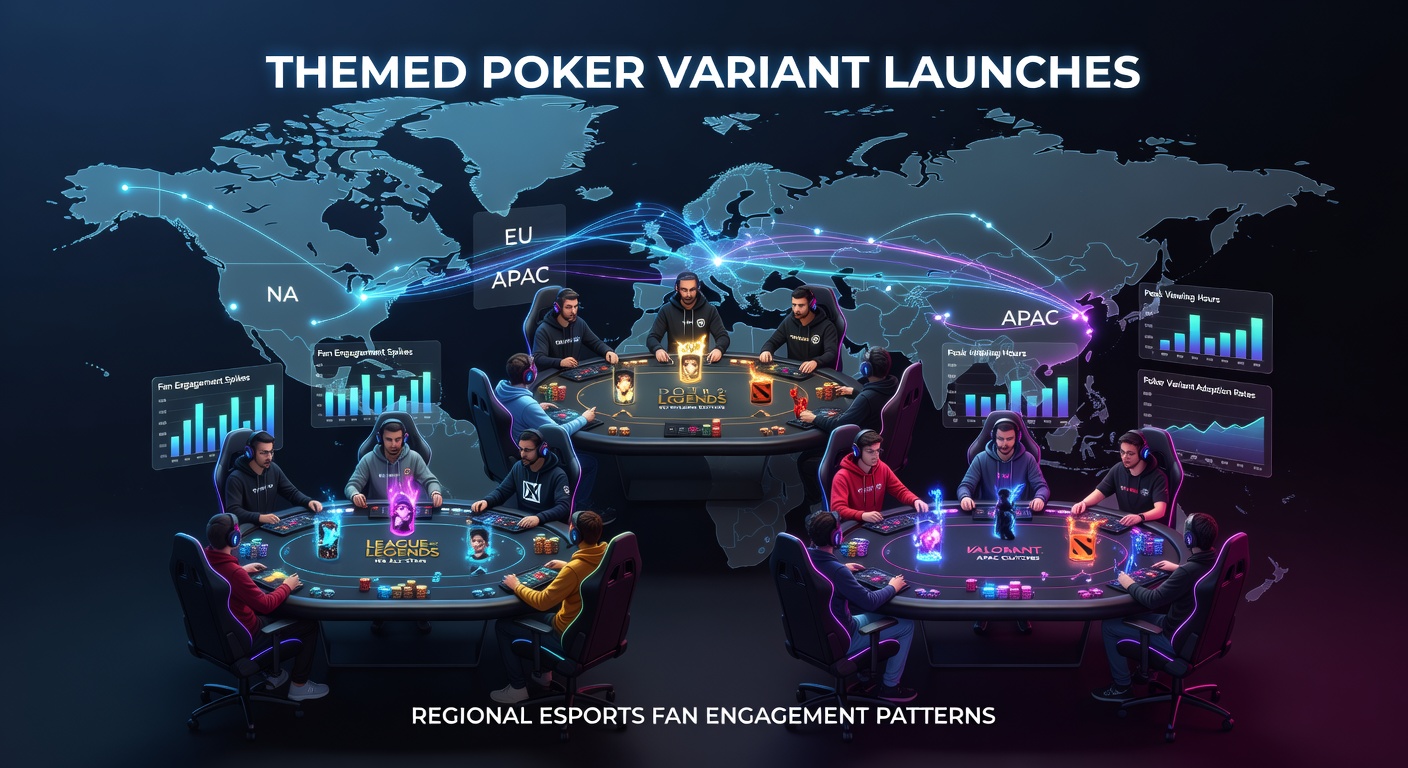
Regional variations in esports viewership have begun shaping the development of specialized poker formats across online platforms, with operators responding to localized audience preferences through targeted game releases. Data compiled through the first half of 2026 shows distinct engagement clusters in Asia, North America, and parts of Europe where dedicated fan bases have prompted the introduction of poker variants that incorporate character abilities, map elements, and tournament structures drawn directly from major esports titles. These adaptations appear most frequently at digital tables where real-time player metrics align with streaming schedules and seasonal esports calendars.
Asia-Pacific Engagement Clusters and Variant Development
Platforms serving markets in South Korea and Southeast Asia have recorded the earliest adn most consistent rollouts of multiplayer poker formats tied to popular MOBA and battle royale titles. Operators cite viewership figures from events such as the League of Legends World Championship and the PUBG Global Series as primary drivers, noting that peak concurrent audiences during May 2026 finals correlated with a measurable uptick in table activity for variants featuring lane-based betting rounds and item-drop mechanics. Research conducted by the Asian Gaming and Entertainment Association indicates that players in these regions spend an average of 47 percent more time in sessions when poker rules reference familiar esports terminology and visual assets.
Launch timelines in these territories typically follow major tournament cycles rather than calendar quarters, allowing operators to capitalize on existing promotional windows created by tournament organizers. One platform operating across Singapore and Malaysia introduced a variant built around ability cooldown timers in April, then expanded the format to include regional qualifier brackets after observing sustained traffic through early May. Regulatory filings submitted to the Singapore Gambling Regulatory Authority show that these themed tables accounted for roughly 28 percent of new player registrations during that period.
North American Patterns and Platform Responses
North American operators have approached themed poker development through a different sequence, focusing first on integration with collegiate and amateur esports circuits before scaling to professional league tie-ins. Engagement data aggregated by the North American Esports Federation reveals that states with established online gaming frameworks experienced higher adoption rates for variants referencing Overwatch and Valorant team compositions. These formats often include role-assignment phases where players select character classes that modify standard poker hand rankings for individual rounds.
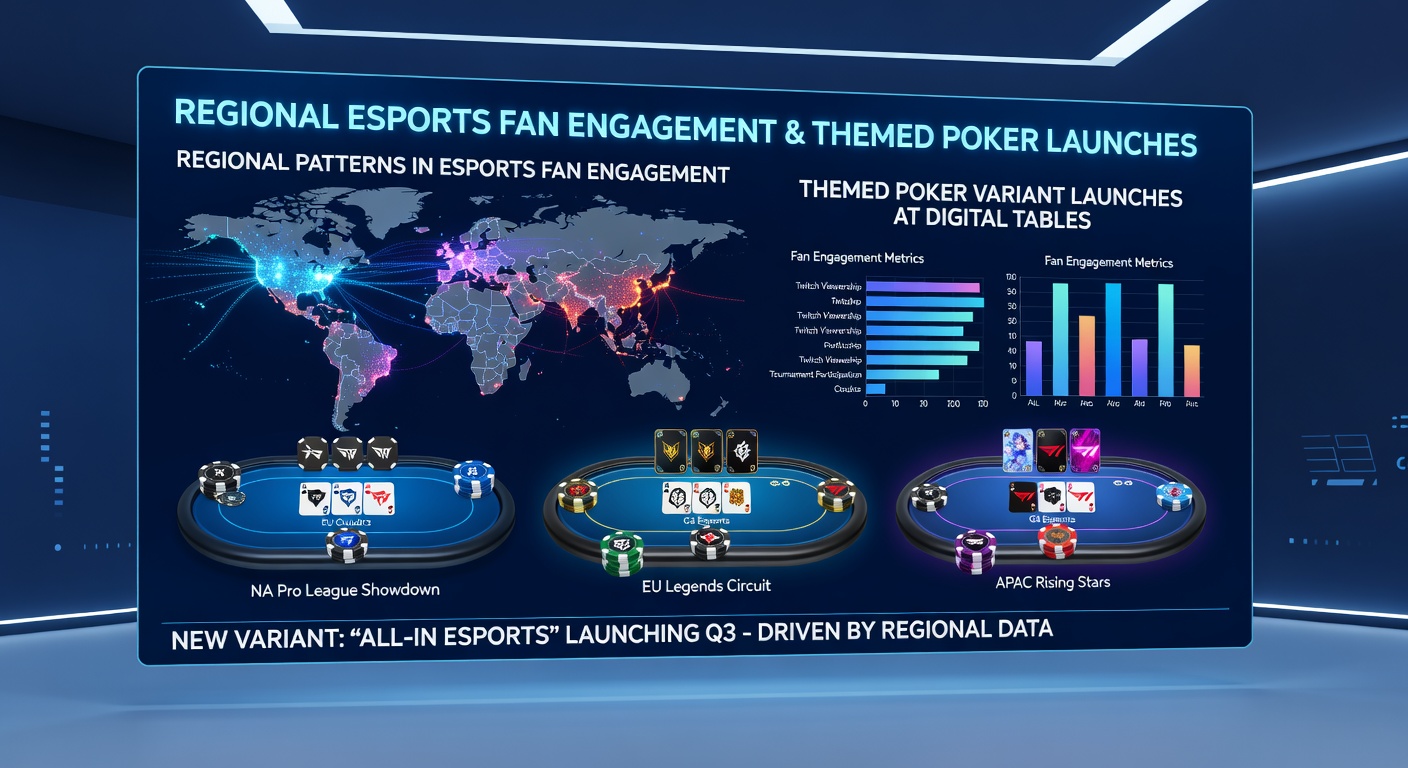
By May 2026 several major platforms had synchronized release schedules wth the start of the North American Valorant Championship season, resulting in coordinated marketing pushes across both esports and gaming verticals. Figures released by the Nevada Gaming Control Board document that tables featuring these adaptations saw a 19 percent increase in average session duration compared with standard variants during the same month. Industry observers attribute part of this growth to cross-promotional campaigns that allowed esports viewers to redeem in-platform rewards for poker participation.
European Market Segmentation and Regulatory Context
European operators have segmented their approaches according to national esports maturity levels, with Nordic and Central European markets showing stronger demand for strategy-game-inspired poker mechanics. Formats incorporating resource-management layers drawn from titles such as StarCraft and Age of Empires have appeared more frequently in these regions, often accompanied by separate leaderboards that track both poker performance and esports prediction accuracy. A joint report issued by the European Interactive Digital Games Association and the University of Amsterdam's Center for Gambling Research found that participants who followed professional esports leagues were 2.3 times more likely to engage with these layered poker variants than casual players.
Regulatory bodies in Malta and the Netherlands have required operators to maintain clear separation between esports content and gambling interfaces, prompting developers to embed thematic elements through cosmetic overlays rather than core rule changes. This approach has allowed platforms to refresh existing tables without triggering additional licensing reviews while still addressing regional player preferences documented in annual market assessments.
Cross-Regional Data Sharing and Future Launch Pipelines
Operators have increasingly pooled anonymized engagement metrics across regions to refine upcoming variant pipelines. Shared datasets from May 2026 show consistent patterns where spikes in esports viewership precede poker table activity by approximately 48 to 72 hours, giving platforms a narrow window to adjust table availability and promotional offers. These insights have led to the creation of modular rule sets that can be localized quickly, such as swapping character abilities or map references without altering underlying payout structures.
Industry organizations including the International Association of Gaming Regulators have begun discussing standardized reporting frameworks that would allow operators to document the influence of esports viewership on gambling product launches more systematically. Such frameworks could help regulators distinguish between organic demand patterns and coordinated promotional efforts across different jurisdictions.
Conclusion
Regional esports engagement patterns continue to inform the timing and design of themed poker variants at digital tables, with operators adapting release strategies to align with local viewership cycles and regulatory requirements. Data collected through May 2026 demonstrates measurable differences in adoption speed and session behavior across Asia-Pacific, North American, and European markets, reflecting distinct cultural and competitive contexts within the broader esports landscape. As platforms refine their use of cross-regional analytics, future variant launches are expected to follow increasingly granular audience signals while remaining within established compliance boundaries.