Music Festival Touring Schedules and Their Ties to Promotional Cycles in Virtual Card Rooms Worldwide
Written by Parker Braun · Jul 27, 2026
Music Festival Touring Schedules and Their Ties to Promotional Cycles in Virtual Card Rooms Worldwide
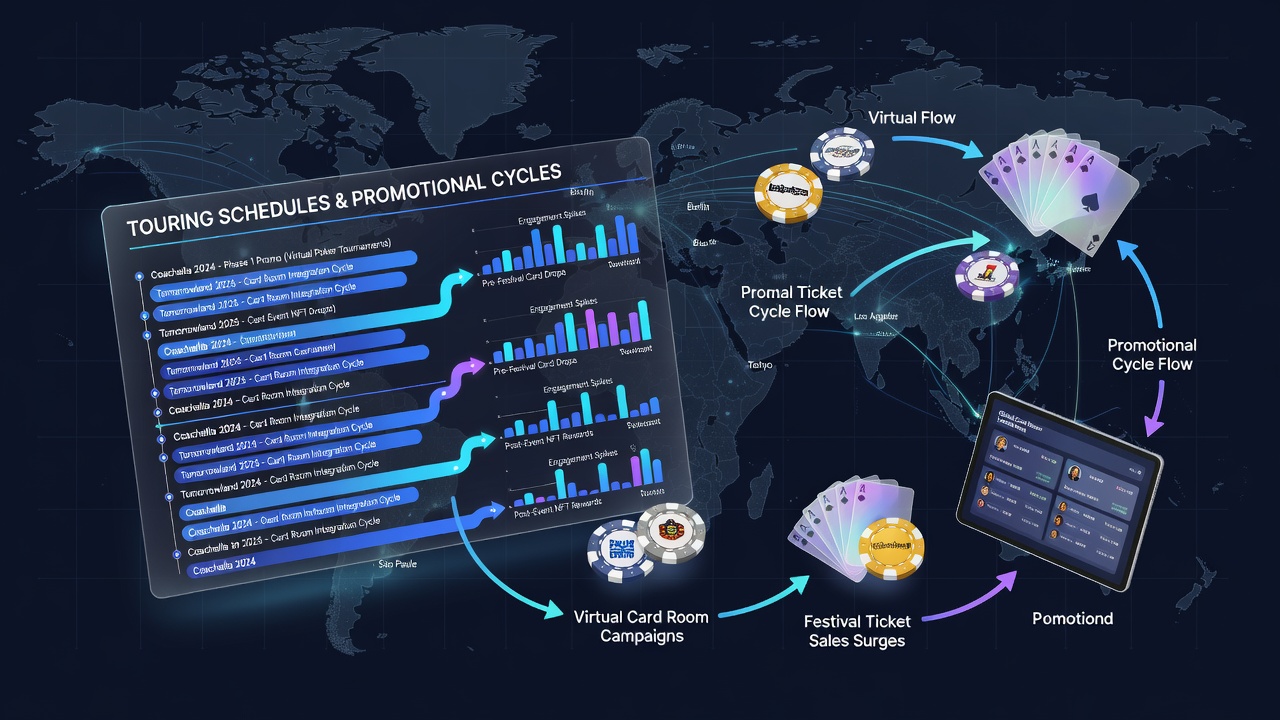
Music festival touring schedules create predictable patterns in virtual card room activity across multiple continents, and operators adjust promotional cycles to align with peak attendance periods at events such as Coachella, Glastonbury, adn Lollapalooza. Data from digital gaming platforms shows increased logins and tournament entries during festival months when travel schedules free up evening hours for mobile users. Researchers tracking seasonal trends note that July often marks a high point because major European and North American tours coincide with extended daylight and vacation blocks.
Festival Calendars Drive Timing of Bonus Structures
Operators examine advance tour announcements from artists and venues to set deposit match offers, freeroll entries, and themed table games that reference festival lineups. One analysis of platform traffic in 2025 found a 12 percent rise in poker session lengths during the first two weeks of major summer festivals, prompting sites to extend reload bonuses through the end of each month. Those who monitor player databases observe that users in festival-heavy regions such as California and the United Kingdom tend to favor shorter sit-and-go formats while traveling, which leads to adjusted prize pools and faster payout schedules.
Regional Adjustments in Promotional Content
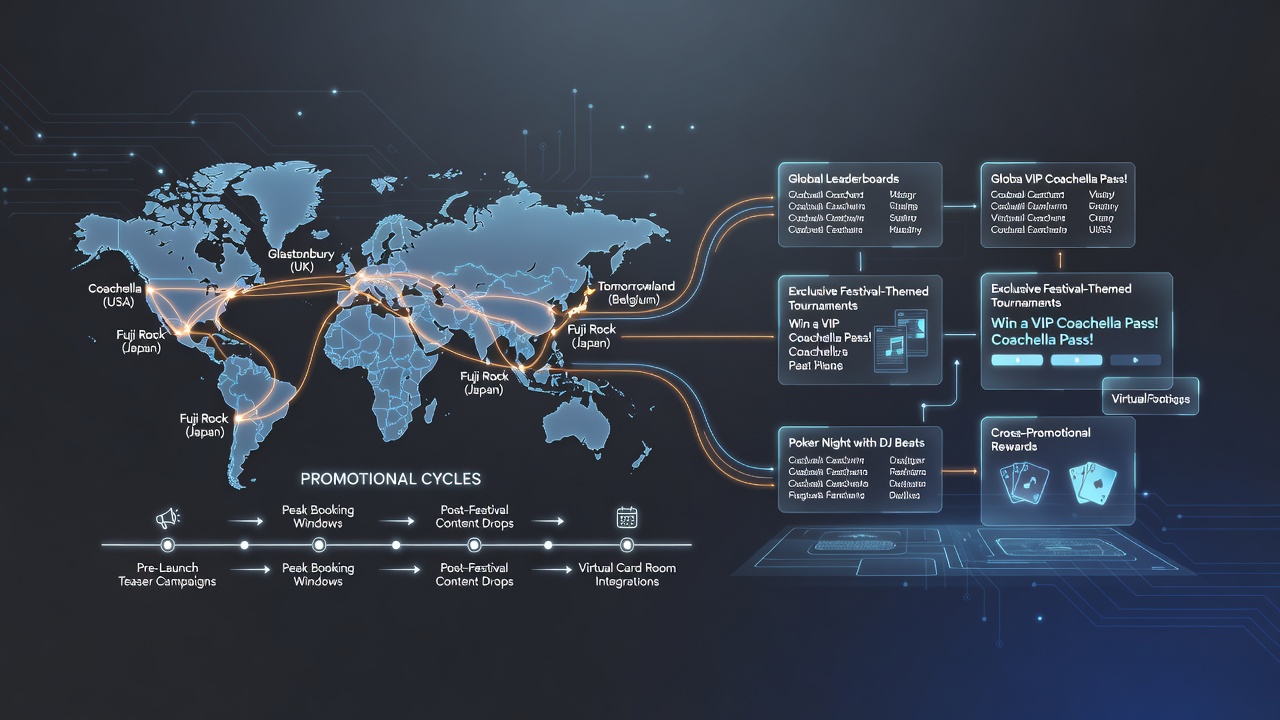
In North America, platforms tie July promotions to outdoor stages by offering leaderboard challenges that reference artist names or set times, while European operators focus on multi-day events such as Tomorrowland by releasing limited avatars and chat emotes. Australian sites follow the Big Day Out circuit and launch similar campaigns in January and February to match their local calendar. Figures released by the Nevada Gaming Control Board indicate that mobile poker revenue in festival-adjacent states climbs steadily from late June through early August, correlating with tour routing data published by festival organizers.
Virtual card rooms also coordinate with streaming platforms so that users watching live sets on their phones can switch to a tournament lobby without leaving the app. This integration produces measurable spikes in concurrent tables during headliner performances, and operators respond by adding temporary rake reductions to keep players engaged between sets.
Data Patterns Across Time Zones
Cross-border traffic studies reveal that users in Asia-Pacific regions increase activity when North American festivals stream overnight, creating a secondary promotional window for sites serving those markets. Platforms respond by scheduling satellite tournaments that feed into larger events timed for festival weekends. Academic papers on digital leisure consumption note that these overlaps produce distinct user cohorts who prefer heads-up formats during festival intermissions and switch to multi-table play once sets conclude.
Payment processors record higher deposit volumes on the opening days of large tours, and virtual card rooms counter this by offering instant bonus credits for verified festival ticket holders. Such verification partnerships with ticketing companies allow operators to segment audiences and deliver targeted messages through push notifications during the hours when festival attendees typically check phones.
July 2026 Outlook and Platform Preparations
Advance schedules for July 2026 list overlapping dates for several major tours across the United States and Europe, and multiple virtual card rooms have already begun drafting bonus calendars that mirror those dates. Industry reports from the European Gaming and Betting Association highlight how operators plan to synchronize freeroll qualifiers with festival start times to capture mobile traffic from attendees resting between acts. Observers tracking server loads expect peak concurrency on Saturday evenings when headline performances finish and users seek quick gaming sessions before returning to campsites or hotels.
These coordinated efforts extend to live dealer environments as well, where studios incorporate subtle festival visuals into table backgrounds for the duration of each tour stop. The result is a measurable uptick in session frequency that operators attribute directly to the alignment between physical event calendars and digital promotional cycles.
Conclusion
Music festival touring schedules continue to shape the structure and timing of promotional cycles in virtual card rooms on a global scale, with platforms using tour data to refine bonus windows, tournament formats, and regional content. Patterns observed in July 2026 will likely follow the same correlations documented in prior years, as operators refine their approaches based on attendance figures and mobile traffic metrics.